
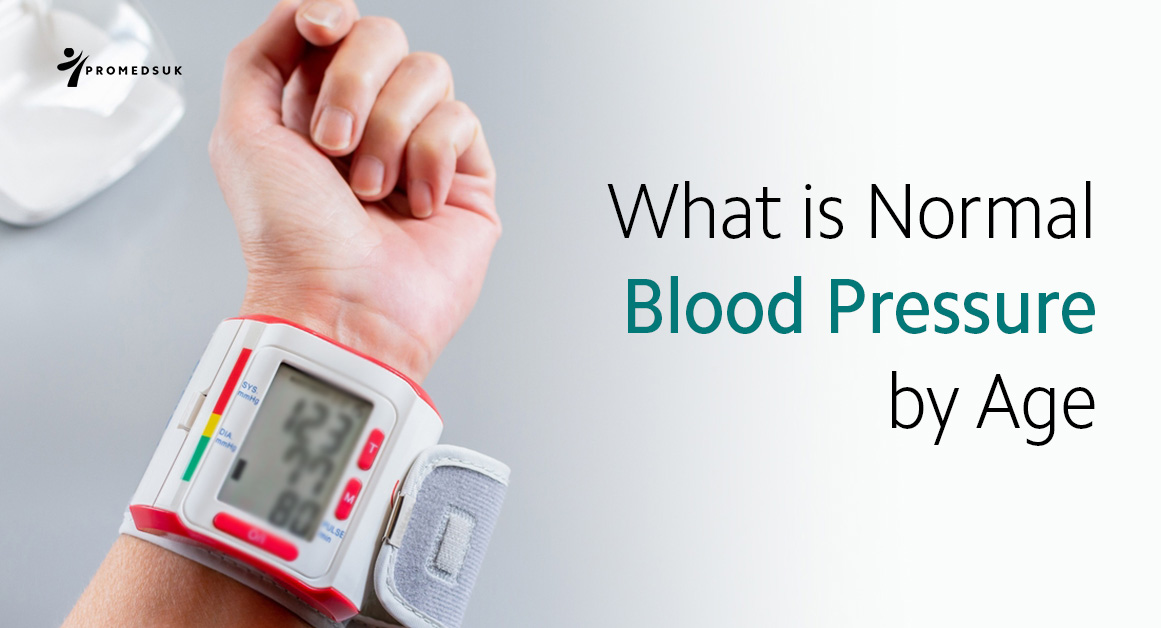
Blood pressure in humans changes throughout life and normally it is affected by age, stress, diet, medicines and overall health. The main question that led us to write a detailed blog is ‘What is Normal Blood Pressure by Age?’. It’s a simple but important question! It’s true that age plays a crucial role in making blood pressure problems worse but it’s not interpreted that simply. Doctors and healthcare professionals use established ranges that determine the normal blood pressure for everyone differently based on their age. The risks of hypertension and cardiovascular diseases can increase with age and their treatments also vary, especially in older adults. That’s why it is important to understand what the normal blood pressure range is for people with different ages. ProMeds UK is here to help you understand normal blood pressure by age, how it is measured and how to control it. We offer accurate information regarding different health issues in the UK and offer genuine medications for your health condition.
Before understanding its normal range you should know what blood pressure actually is. It’s a force of blood pushing against the walls of your arteries when your heart pumps blood around your body. It is recorded or measured by two numbers:
Doctors and professionals often write the blood pressure reading in 120/80mmHg form. The systolic blood pressure or the upper number goes first and then the diastolic blood pressure/ lower number. Systolic blood pressure is the pressure in the arteries when your heart contracts and pumps blood. Meanwhile, the Diastolic blood pressure is the pressure when the heart relaxes between beats. The measuring tells your doctor how much pressure is being placed on your circulatory system. Persistently high blood pressure can put additional strain on blood vessels and organs, including the heart, brain, kidneys and eyes. Your GP might take your blood pressure more than once because a single measurement does not always give a complete picture.
There is no single set of medically accepted “normal” blood pressure numbers for every adult age group. For most adults in the UK, a reading between 90/60mmHg and 120/80mmHg is considered to be normal according to the National Institute for Health and Care Excellence. Readings above or lower than these ranges are considered abnormal and can be life threatening. This means a healthy reading for someone in their 20s doesn’t have to be different from someone in their 50s. This also doesn’t mean that every person in an age group should have exactly the same blood pressure. For better understanding we have provided a table below containing overall normal blood pressure of different age groups:
Specifically in adults there are different stages of blood pressure and here is all their names and blood pressure range by Blood Pressure UK:
High blood pressure is difficult to detect because it comes with no obvious symptoms. This is one of the major reasons why regular blood pressure checks are important. Some individuals might go through dizziness, headaches and blurred vision but they don’t always mean your blood pressure is high.
When you feel anxious, your body releases stress hormones which increases your heart rate and affects your blood pressure temporarily. According to the NHS, faster heartbeat, dizziness, sweating breathlessness are among the physical symptoms of anxiety. Age is highly relevant because the long-term risk associated with high blood pressure generally increases as people get older. However, anxiety itself is not the root cause of high blood pressure. And it also doesn’t mean that you should start taking blood pressure medicines for treating anxiety.
Keep in mind that anxiety and hypertension are different conditions. A temporary rise during an anxious moment is not the same as consistent hypertension. If you are regularly experiencing anxiety with high blood pressure, consult with your GP. Depending on your circumstances, your GP will recommend treatment that may involve lifestyle changes, therapy or medication. Again do not start using Anxiety pills just for managing the blood pressure. Also be careful while using a blood pressure medication with sleeping pills if you are going through insomnia too. Your doctor can help you understand whether a medicine can lower your blood pressure or can it interact with other medicines.
Managing blood pressure can be a difficult task if you also have anxiety. It only becomes easier to manage if you pay attention to your overall routine instead of just focusing on the blood pressure numbers. The NHS and NICE in the UK recommends measures like following a heart-healthy diet, maintaining a healthy weight and reducing sodium intake etc. These recommendations are for young adults and middle aged people to lower the blood pressure, but the treatment can be different for older individuals. Here are the list of daily habits that can help you manage your blood pressure and anxiety both:
If your GP has diagnosed you with hypertension, he/she might have recommended some lifestyle changes along with medication. Do not change the dose, stop or take too much of that medication as it can cause severe drowsiness, dizziness and other unforeseen health issues. If your GP has prescribed you both a blood pressure pill and anxiety medication, make sure you are not taking them together. This can decrease your blood pressure to a dangerously low level. You doctor might have prescribed you one of these anxiety medicines in the UK:
Make sure you use these medicines with care and only for short-term. Do not use them for more than two weeks unless your doctor says they can be addictive and habit-forming. Never increase or decrease the number of pills on your own and never mix it with other medications like opioid painkillers and nootropics etc.
Managing your blood pressure daily is more important than trying to find a fixed number according to your age. According to various researches and clinical guidance, there is not a single normal blood pressure number instead there are normal ranges. Your age and overall health helps the doctor decide the severity of the hypertension and what should be the treatment for it. With regular checks and lifestyle changes you can easily manage your blood pressure and anxiety issues both. Eat well, pick up some daily physical activities and reduce alcohol and smoking to avoid dangerous heart rate.
At ProMeds UK we offer clear, evidence-based health information that helps our patients understand common health questions. You can also easily buy high quality Anxiety medications from us without any prescription, available at a highly affordable price. We deliver genuine and sealed pack medicines all across the UK in discreet packaging to maintain your privacy. You can also try out our overnight delivery options if you want your medications quick. We have secure online payment options and also offer discounts when you pay via bitcoin.
Q: What is a normal blood pressure for a 60-year-old?
A: There is not an exact normal blood pressure number for people over 60. But normally their blood pressure should be 135/88 mmHg.
Q: Does blood pressure normally increase with age?
A: Yes, blood pressure issues are more common among older people but not everyone with increasing age has hypertension. High blood pressure often shows up without any signs that’s why regular monitoring is important.
Q: Is blood pressure related to heart rate?
A: Yes, heart rate and blood pressure are related because they both measure how your cardiovascular system works, but a high heart rate doesn’t always mean your blood pressure is also high. Your heart can be increased to physical activity, stress or even after drinking coffee.
