
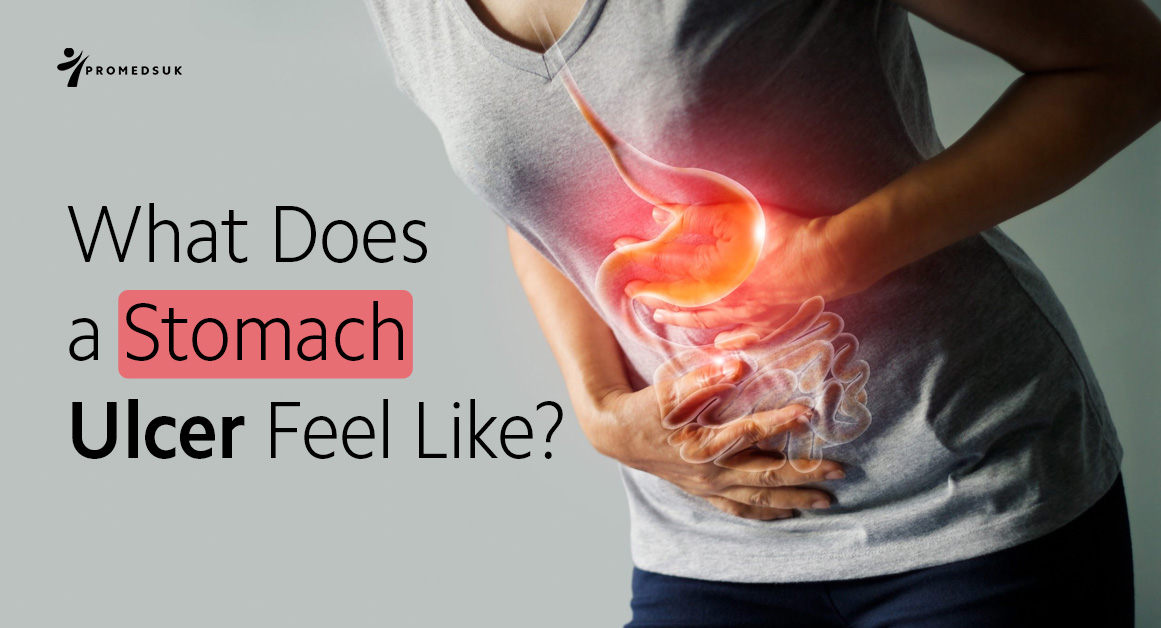
Upper-middle abdomen pain doesn’t always mean you have a stomach ulcer as many other digestive issues have these similar symptoms. A stomach ulcer is open sores in your stomach formed when digestive acids and enzymes weaken the protective mucus layer in the stomach. Stomach ulcer feels like a burning or gnawing pain anywhere from below the breastbone down to the navel. This pain is more common on an empty stomach or sometimes happens between meals but the ulcer location decides the exact pain pattern.
You might also feel a sudden abdominal cramp or burning ache in the upper-middle abdomen which can be persistent. Indigestion (dyspepsia), heartburn, gastritis and gallbladder issues can cause this kind of pain too that’s why don’t always assume you have a stomach ulcer. Today, we’ll tell you all about what does a stomach ulcer feel like, what its types are and how to identify them.
You can describe a stomach ulcer like a burning dull ache which can be intermittent and persistent. The stomach pain starts to flare up, lasts for a few minutes and then fades away while in some cases it gets worse after eating. Normally, it’s not a life threatening thing but in certain cases like internal bleeding and perforation (hole in the stomach lining). This changes the intensity of the pain into sharp and stabbing agony that doesn’t stop. You might feel symptoms like dizziness, undescribed weakness, blood in vomit and black or tarry stool. Look for immediate medical attention if any of these symptoms appear. The intensity of symptoms also vary depending upon the type of the ulcer. Yes, there are different types of stomach ulcers depending upon their location and nature.
The most common stomach ulcer you know is the peptic ulcer which forms open sores in the digestive tract lining. But there are more and doctors classify them into distinct types depending upon their location in the digestive system and the cause:
Duodenal ulcer is the most common type of peptic ulcer that occurs in the duodenum (the first section of small intestine). During this type of ulcer the pain worsens due to empty stomach (usually after 2 to 3 hours of meal). Sometimes it occurs in the middle of the night out of nowhere and it becomes better after you eat something or take an antacid.
This type of ulcer is developed directly on the inner part of the stomach wall. Gastric ulcer causes burning pain right after you eat something. This happens because when you eat something your stomach produces acid which doesn’t go easy on your open sores in the stomach. This ulcer is different from the duodenal one because eating causes more pain. People often feel nauseous and notice changes in their appetite while going through a gastric ulcer.
Stress ulcer is different from the ulcers we have discussed above. It happens due to psychological or daily emotional stress which is very common these days. It’s an acute, fast-forming mucosal lesion in the stomach lining that develops in people going through severe physical or psychological trauma. Critical illness, major surgery, severe burns or organ failure can also be the reason behind it. It happens due to the reduced or poor blood flow to the digestive tract triggered by the extreme psychological and physical trauma. And this makes the patients prone to sudden internal gastrointestinal bleeding.
Refractory ulcer is a kind of gastric or duodenal ulcer that doesn’t heal even after 8 to 12 weeks of acid-blocking medication treatment. This normally happens due to the persistent H. pylori infections which builds tolerance against regular antibiotics. Other factors like smoking, taking harsh painkillers and drinking alcohol can also prevent your ulcer from healing. Individuals with a rare medical condition like Zollinger-Ellison syndrome are also very prone to refractory ulcers. Because this condition produces excess stomach acid making the medicines less effective.
Stress and anxiety affects your digestive system but they do not directly cause stomach ulcers. Peptic/stomach ulcers happen due to Helicobacter pylori infection or use of harsh anti-inflammatory drugs (NSAIDs). However, psychological stress can worsen digestive symptoms and make existing ulcers symptoms more difficult to cope with. If you are using anxiety medicines for your anxiousness and stress then it is advised to use them in moderation. Because excessive use of these pills can disrupt your gut–brain connection disturbing your gut bacteria. Using anti-anxiety pills more than recommenced can also develop addiction and other unforeseen health risks. Also a major precaution to not to use anxiety tablets or SSRIs with NSAIDS/ painkillers as this combination can increase the risk of gastrointestinal (GI) bleeding.
Other than medicines, try some natural ways to prevent stomach ulcers and improve your gut health in daily life. For better digestive health, improve your diet (fiber-rich food), quit or limit smoking & alcohol and add physical exercises to your routine. Use medicines only if your doctor advises. If you want some good recommendation for anxiety pills to use in moderation the try:

Stomach ulcer can be very daunting due to its excruciating pain. This persistent pain can affect your daily life very much and your overall physical wellbeing. A person going through the stomach ulcer feels like a burning or gnawing pain that can be intermittent and continuous. Open sores due to stomach ulcer usually target the upper-middle abdominal area and the intensity of pain depends upon its type. Besides the H. pylori bacterial infection and harsh anti-inflammatory drugs, physical and psychological trauma is also the reason behind stomach ulcer.
To manage your stress and anxiety during stomach ulcer you can use the anti-anxiety pills but in moderation. Excess use of anxiety medicines can cause extreme dizziness and develop addiction. The last thing you want during your stomach ulcer is to get unforeseen side effects from the medication. If you are looking to buy anxiety medicines in the UK without prescription then come to our website. At ProMed UK we are offering 100% genuine medications in secure and discreet packaging. You can place your order online and get it delivered overnight at your doorstep no matter where you live in the UK. Besides the anxiety pills we also have sleeping pills, painkillers, nootropics and sexual health medicines.
Q: What food to avoid if I have a stomach ulcer?
A: Avoid spicy food, acidic food, caffeinated drinks, fried/fatty food, smoking and alcohol if you have a stomach ulcer and you are using proper medication for it.
Q: What are the symptoms of stomach ulcer?
A: Abdominal discomfort, indigestion, heartburn, bloating and nausea are some common stomach ulcer symptoms. Meanwhile, vomiting blood, sudden severe abdominal pain, undescribed weakness and black tarry stool are among severe symptoms of stomach ulcer.
Q: How long does it take to treat a stomach ulcer?
A: With proper treatment and care even the most complicated stomach ulcers take 4 to 8 weeks to heal properly. But complex cases like H. pylori-infection take almost 12 weeks or longer.
