
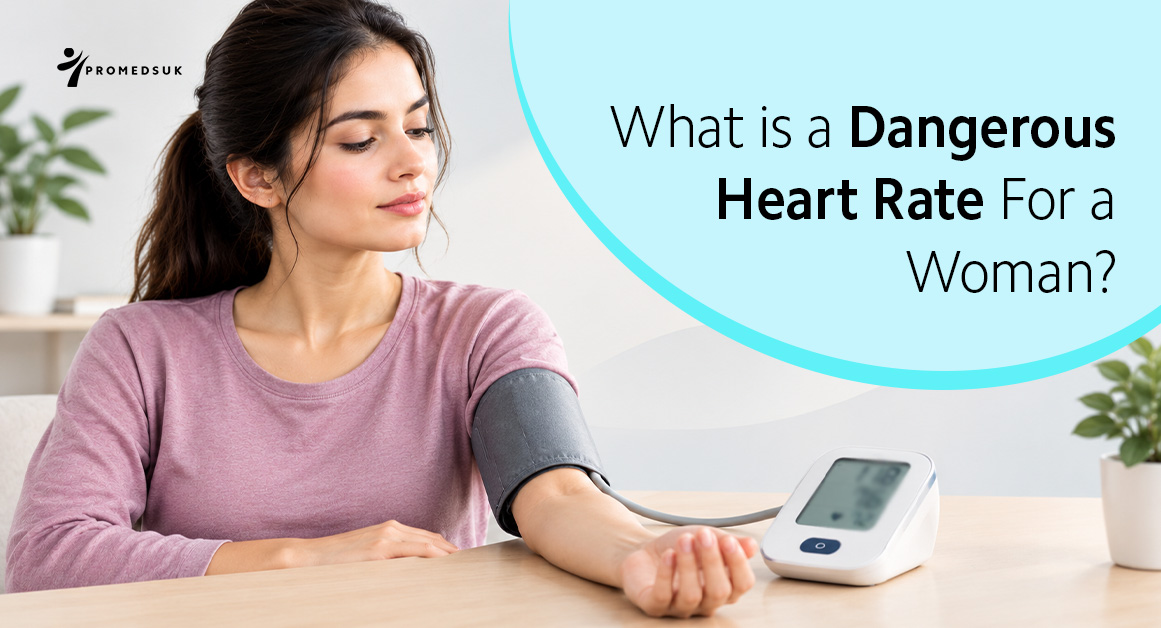
If you are someone wondering ‘what is a dangerous heart rate for a woman?’. There isn’t a single number that describes the dangerous heart rate for everyone. The dangerous heart rate for a woman is over 100 beats per minute or heart beat below 60 per minute. Women consistently experiencing this abnormal heart rate should seek immediate medical help. It can be more severe if they are also experiencing symptoms like chest pain, breathlessness, dizziness, fainting or unusual weakness. Unusually high or very slow heart rate can sometimes point towards an underlying heart rhythm problem or other medical conditions.
So understanding what heart rate is normal for a woman’s age, health and circumstances is important. This guide explains when a heart rate may be concerning and when you should seek medical help in the UK. At ProMeds UK, we provide accurate information and guidance about different medical conditions and offer relevant medicines for certain health conditions. We are spreading awareness among UK citizens to understand their medical condition first and then choose the right medicine for it.
Before discussing the dangerous heart rate in women, let us tell something about the normal heart rate in adult women. The heart rate may vary when resting and in exercise (after a physical activity). The normal heart rate in women typically ranges from 60bpm to 100bpm, often narrowing to 70–95 bpm depending on fitness and age.
A slightly increased or low heart beat is normal as it can happen after a physical activity, stress or even after a coffee. In medical terms increased heart rate is called Tachycardia and lower heart rate is called Bradycardia. Even though slight Tachycardia and Bradycardia is normal but consistent irregularities require medical attention.
Tachycardia and bradycardia are two types of irregularities in heart rate. Tachycardia refers to a heart rate that is faster than 100 beats per minute at rest. While bradycardia generally refers to a resting heart rate below 60 bpm in adult women. However, neither number automatically means that a person is in any kind of danger. A low heart rate can be normal in physically fit people, while a temporary fast heart rate can occur due exercise, fever or even dehydration. They share some similar symptoms but still have their differences:
| Aspect | Tachycardia | Bradycardia |
| Meaning | Heart beat is faster than normal | Heart beat is lower than normal |
| Typical resting rate | Above 100 bpm | Below 60 bpm |
| Symptoms | Pounding heartbeat, dizziness, breathlessness, chest discomfort | Dizziness, tiredness, weakness, breathlessness or fainting |
| Causes | Exercise, anxiety, fever, dehydration, anaemia, thyroid problems or abnormal heart rhythms | High fitness levels, certain medicines, thyroid problems or problems with the heart’s electrical system |
| When is it normal? | during exercise, stress or after coffee | A lower rate can be normal, especially in physically fit people |
| When is it Dangerous? | When heart rate ranges from 150–250 bpm | When heart rate ranges from 40–50 bpm |
| When medical attention is needed? | When it occurs at rest, persists or causes concerning symptoms | When it is persistent or causes symptoms |
Several everyday factors can slightly increase or decrease your heart rate. But they do not necessarily indicate a heart problem. Here are some factors that can cause irregularities in women heart rate:
Yes, anxiety causes increased heart rate and palpitations in women. A slightly higher heart beat is normal, temporary and harmless for physically fit individuals. It’s only serious when it comes with severe symptoms that can point towards an underlying cardiac condition. Anxiety triggers the sympathetic nervous system in your body which releases stress hormones like adrenaline and noradrenaline. These hormones signal the heart to beat faster, pushing up your resting heart rate than usual. Anxiety also makes a person hyper-aware of normal bodily functions, so harmless extra beats or a standard rhythm may feel intense. A person can experience anxiety and tachycardia at the same time, as anxiety is a common trigger for a rapid heartbeat.
Yes, you can manage your heart rate irregularities at home unless they are accompanied by severe symptoms. You can use some immediate relief techniques and make some long-term lifestyle changes to manage a healthy heart rate.
Yes, certain anxiety medications are used to manage anxiety and tachycardia in the UK, specifically beta-blockers. Antiarrhythmic drugs, calcium channel blockers and rate-control agents like digoxin are also sometimes considered beneficial. Accurate treatment depends entirely on whether you have supraventricular tachycardia (SVT) or the increased heart rate is just a temporary symptom of anxiety.
Start medication only after discussing it with your doctor; he will determine which medicine you should take for dangerous heart rate.
If your doctor diagnoses you with severe anxiety only then the treatment might be different. which often causes spikes in your heart rate then the treatment might be a little different. Anxiety causes abnormal spikes in the heart rate but they are temporary, it doesn’t mean you have supraventricular tachycardia. Doctors might prescribe you some stronger medicines like benzodiazepines if your anxiety symptoms are severe. They are only used for short-term purposes as they are highly addictive and habit-forming. Never increase or decrease the dose without asking your doctor. And never take them with other medicines especially, sleeping pills and strong opioid painkillers. Here some common benzodiazepines found in the UK:
Dangerous heart rate in women is any number above or lower than 60-100 bpm. A slightly higher or lower heart rate is normal due to stress, physical activities or fever. but seek medical help if the heart rate ranges from 150–250 bpm or is between 40–50 bpm. This can happen due to various reasons like anemia, thyroid problems or an underlying issue with the heart’s electrical system.
There are different techniques through which you can manage abnormal heart rate at home. But if these symptoms are occurring due to anxiety then treatment might be different. Doctors might prescribe anxiety medications like beta-blockers, calcium channel blockers and even benzodiazepines. Strong anxiety medicines are only prescribed when anxiety is severe and can’t be managed by lifestyle changes alone. If you are looking to buy anxiety pills online then ProMeds UK is your ideal platform.
We offer 100% genuine medicines in the UK with highly competitive prices. You don’t need any prescription to place your order with us. We also offer overnight delivery options with secure and discreet packaging.
Q: What is a dangerous heart rate for a woman at rest?
A: If a woman’s heart rate is above 100 bpm or below 60 bpm at rest then it’s dangerous. While normal spikes and drops are normal, it’s better to seek medical advice.
Q: Can anxiety cause a dangerous heart rate?
A: Anxiety can cause a fast or pounding heart rate, but in a structurally healthy heart, this temporary increase is not dangerous or damaging unless the symptoms are severe.
Q: Does age matter for abnormal heart rate in women?
A: Yes, age matters significantly when evaluating abnormal heart rates and rhythms in women. The likelihood of developing arrhythmias or atrial fibrillation increases as women age, commonly as they pass the age of 50.
